

When Motorola rebooted the legendary Razr line as a foldable phone in 2019, it felt like such a natural evolution. Unfortunately, we haven’t gotten a ton of updates since then aside from a mildly-upgraded 5G variant in 2020 and a China-only version late last year. But that changes now because today Motorola is announcing not one but two new members of the Razr family with the Razr and Razr+. And after getting a chance to check both of them out, I feel like each one has some interesting features you don’t get on competing devices.
In terms of general design, both the Razr and Razr+ share the same chassis and internal flexible display. The main difference is that the Razr+ sports a 3.6-inch 144Hz pOLED screen on its front – which Motorola claims is the largest exterior display on any foldable available today – while the standard Razr has a much smaller 1.5-inch external panel. The Razr+ also boasts faster performance thanks to a Snapdragon 8+ Gen 1 chip that helps the phone achieve a 165Hz refresh rate on its main screen, whereas the Razr uses a Snapdragon 7 Gen 1 chip that can only support 144Hz. Both also feature 30-watt wired charging and wireless Qi charging, though the latter is capped to a slow 5 watts.
Both feature a side-mounted fingerprint sensor, 8GB of RAM and up to 128GB of storage (or 256GB on the Razr+). They have the same 32-megapixel hole-punch selfie cameras on the interior, with the Razr+ packing a 12-MP main rear camera and a 13-MP ultra-wide/macro setup, while the regular Razr’s sensors are 64-MP and 8-MP respectively. And as a nod towards everyday durability, both Razrs do have some form of water resistance, though their IP52 ratings aren’t good for protecting against more than a weak splash or light rain.
With that out of the way, I’m going to focus on the Razr+ because it’s the more interesting of the two. Unlike the previous foldable Razrs from 2019 and 2020, the new model doesn’t sport the line’s iconic chin, which is a bit sad. But in exchange, you get a much bigger screen that feels more usable when compared to rivals like Samsung’s Z Flip 4. And the way the display wraps around the phone’s two main cameras looks better too.
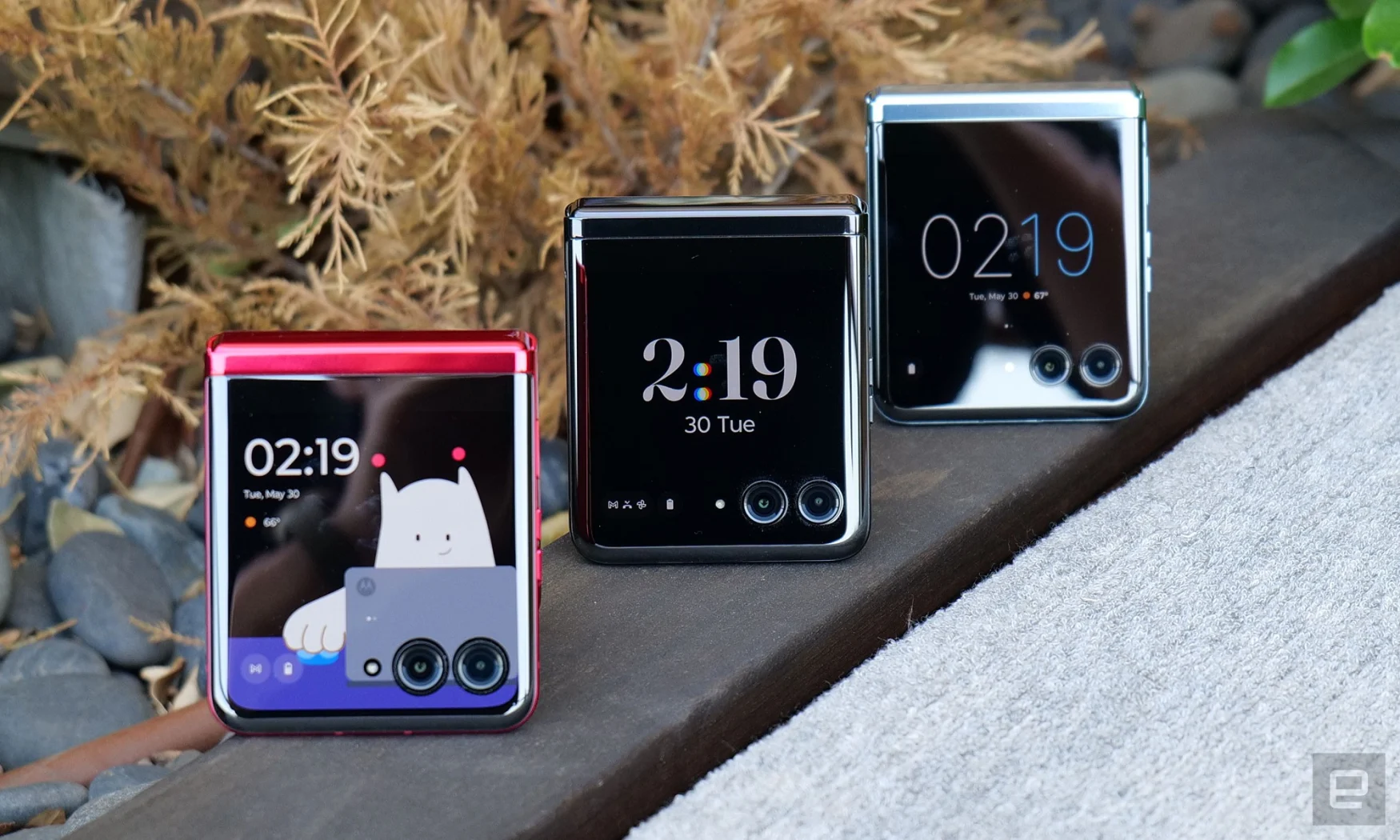
Then when you open up the Razr+, you’re greeted by a beautiful 6.9-inch flexible OLED display with great brightness (up to 1,100 nits). And while there technically is a crease that you can feel if you run your fingers over the middle of the screen, visually, it’s almost undetectable. It’s a really nice acheivement and when you combine that with a chassis that folds completely flat and measures just 15.1mm when closed, you start to really appreciate the many subtle design tweaks Moto made to get here. You even get Gorilla Glass Victus in the front and back for a bit of extra toughness (except for on the Viva Magenta model which gets a vegan leather material in the rear).
Gallery: 2023 Moto Razr and Razr+ hands-on photos | 11 Photos


In a lot of ways, the Razr+’s body feels like a more polished and functional take on the Z Flip 4’s template. The outside screen is bigger and easier to use while the flexible display on the inside doesn’t suffer from any distracting furrows or wrinkles. Moto even included a slightly larger 3,800 mAh battery, which is great because longevity has never been a strong suit of flip-style foldable phones. And thanks to a new hinge that can hold its position when half open, Moto was even able to include a number of nifty camera modes so you can hold the phone like an old-school camcorder, use the exterior screen to give your subjects a preview of your shot or trigger the new Photobooth mode by holding your hand up.
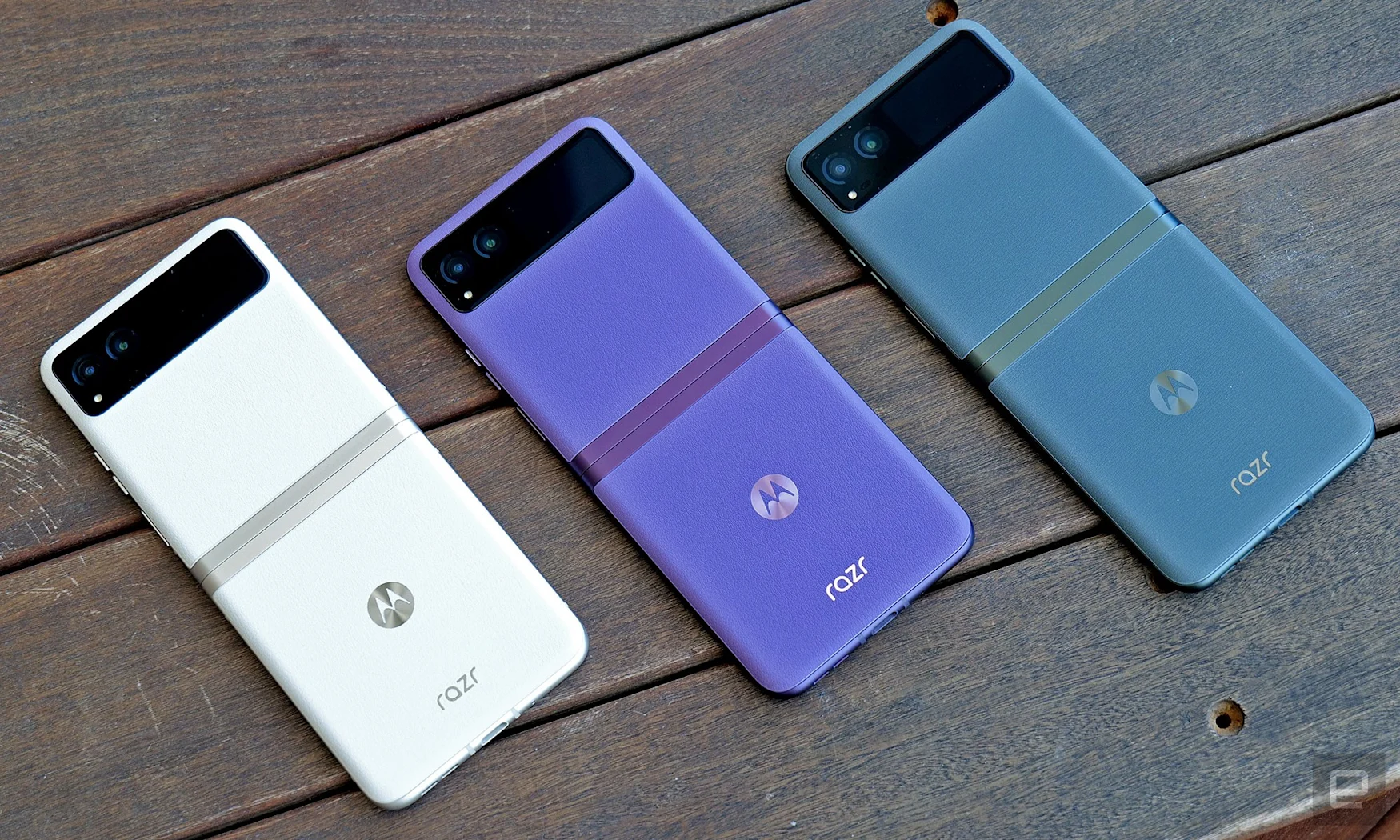
As for the standard Razr, the benefit of having a smaller exterior screen is that it leaves room for a larger sensor on its main camera in addition to a slightly bigger 4,200 mAh battery. And while you don’t get Gorilla Glass Victus on its exterior, subbing that out for vegan leather seems like a great choice both for style and durability.





0 Comments